Low Fade vs. Mid Fade vs. High Fade: Which One Should You Get?
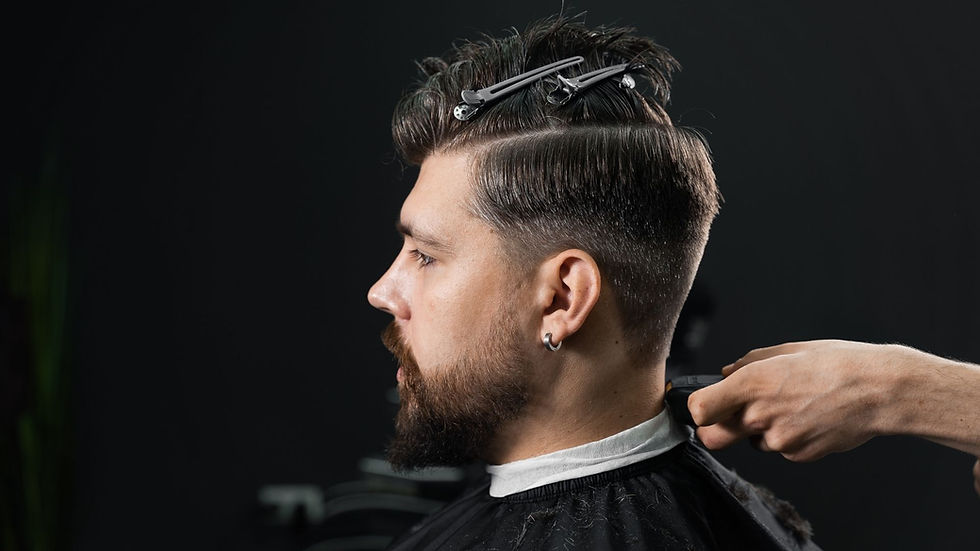
If you've sat in a barber chair and heard the question "how much do you want off the sides," you already know how quickly things can go sideways. Low, mid, and high fades all blend your hair down to skin, but where that blend starts changes everything about how the cut looks, how long it lasts, and how much work you'll put into it between visits. A low fade starts just above the ear and keeps things subtle. A mid fade starts around the temple and splits the difference between sharp and soft. A high fade climbs well above the temple and turns heads the moment you walk into a room. Twenty years behind the chair has taught me that picking the right one isn't about trends. It's about your face shape, your hair texture, your job, and how often you're realistically going to get back in that chair for a cleanup.
Key Takeaways
Low fades offer the most versatility and workplace-friendly look, with fade lines starting just above the ear.
Mid fades are the most requested cut in most shops because they balance boldness with everyday wearability.
High fades create the sharpest contrast and work best with strong hair texture and confident personal style.
Face shape, hair density, and how often you can get a touch-up all matter more than whatever look is trending on social media.
Your barber can adjust any of these three fades to suit your bone structure, so a good consultation beats a photo on your phone every time.
What Exactly Is a Fade Haircut, Anyway?
A fade haircut is any style where the hair gradually shortens from longer on top to skin-close at the bottom, with no harsh line separating the lengths. Think of it like a sunset. There's no exact point where daylight turns to darkness. It's a gradual blend. That's the whole idea behind a proper fade, and it's the reason a bad one stands out so fast. When the transition is choppy or uneven, your eye catches it immediately, even if you can't explain why.
Where Did the Word "Fade" Actually Come From?
Barbers have been blending hair for close to a century, but the term "fade" as we use it today really took hold in Black barbershops in the mid-20th century, where tapering close-cropped styles down to the skin became a signature technique. By the 1980s and 90s, fades exploded into mainstream pop culture through hip-hop, sports, and film. Guys like Will Smith in the "Fresh Prince" days and countless athletes turned the fade from a niche technique into a global standard. Now it's the most requested haircut style on the planet, according to booking platform data from StyleSeat, which reported fades as the top-searched men's haircut term for four consecutive years through 2023.
High Fade, Low Fade, Mid Fade: What's the Actual Difference?
The difference comes down to one thing: elevation. That's the point on your head where the fade begins its climb from skin to hair.
Fade Type | Starting Point | Visual Impact | Best For |
Low Fade | Just above the ear, near the hairline | Subtle, clean, professional | Conservative workplaces, first-time fade wearers |
Mid Fade | Between the temple and the top of the ear | Balanced, versatile | Most face shapes and lifestyles |
High Fade | Above the temple, sometimes near the crown | Bold, high-contrast | Guys who want maximum statement and definition |
Why Does Elevation Matter So Much?
Elevation controls how much "shape" your haircut shows off. A low fade barely reveals your head shape. A high fade puts it on full display, which is why hair density and skull shape matter more as you go higher. This isn't just barber talk. It's basic geometry. The higher the fade line, the more skin is exposed, and the more your barber needs precision to keep the blend looking clean instead of choppy.
Now that you know what separates these three fades on a technical level, let's dig into each one individually, starting with the fade that's been the go-to for guys who want sharp without shouting.
What Is a Low Fade and Who Should Get One?
A low fade keeps the tapering close to the hairline, usually starting just above the ear and finishing at the neckline. It's the most conservative of the three fades, which makes it a favorite among men who want a clean, groomed look without drawing too much attention to the haircut itself.
What Does a Low Fade Look Like in Practice?
Picture a business suit. Sharp, put together, but not flashy. That's a low fade. The sides taper gently, there's minimal skin showing, and the overall silhouette stays close to the head. It pairs well with classic styles like a side part, a textured crop, or a simple slick back.
Who Wears a Low Fade Best?
Low fades suit almost everyone, but they're particularly strong for:
Guys in corporate or conservative work environments where a bold high fade might raise eyebrows in the office
First-time fade wearers who want to ease into shorter sides without a dramatic change
Men with thinner hair density who don't want too much skin exposure drawing attention to sparse areas
Older men who prefer a timeless, mature look over trend-driven styles
What Are the Pros and Cons of a Low Fade?
Pros | Cons |
Professional, safe for any workplace | Less dramatic, can look plain on its own |
Grows out gracefully, less frequent trims needed | Doesn't show off intricate top styling as well |
Works with almost every face shape | Can look unfinished if the blend isn't crisp |
Lower maintenance than mid or high fades | Not as trend-forward as bolder options |
How Often Do You Need to Get a Low Fade Touched Up?
Because the fade line sits close to the hairline, regrowth is less noticeable. Most guys can stretch four to five weeks between visits before the line starts blurring into a regular taper. That's roughly a week or two longer than what you'd need with a mid or high fade, which makes the low fade a smart pick if your schedule doesn't leave much room for regular barbershop visits.
The low fade is the safe, sharp choice. But if you want more contrast without going all-in on boldness, the mid fade is where most guys actually land.
What Is a Mid Fade and Why Is It the Most Requested Cut?
The mid fade starts around the temple, roughly between the low fade's starting point and the high fade's dramatic rise. According to a 2023 survey by Men's Health of over 1,000 barbershop clients, the mid fade was cited by 41% of respondents as their go-to request, more than low and high fades combined.
Why Has the Mid Fade Become So Popular?
It's the Goldilocks cut. Not too subtle, not too extreme. The mid fade gives you enough contrast to show off skin and definition without going full statement piece. It works with nearly every hairstyle on top, from textured crops to slick backs to curly fringes, which is a big reason it's become the default request in barbershops nationwide.
What Hairstyles Pair Best With a Mid Fade?
Textured crop: Short, choppy top that contrasts nicely with the tapered sides
Pompadour: Classic volume up top with a modern edge from the fade
Curly top fade: Popular with guys who have natural curl pattern and want the sides tamed
Slick back: Business-meets-edge combination that works in and out of the office
Mid Fade vs. Low Fade: Which One Actually Suits You Better?
This is one of the most common questions I get in the chair. Here's how I break it down for clients.
Factor | Low Fade | Mid Fade |
Workplace formality | Better for strict dress codes | Fine for most modern offices |
Boldness | Subtle | Noticeably sharper |
Face shape flexibility | Excellent for all shapes | Great for oval, square, diamond |
Maintenance frequency | Every 4-5 weeks | Every 3-4 weeks |
First impression | Understated | Confident, put together |
If your job has a strict dress code or you just don't like too much attention on your haircut, go low. If you want people to notice you got a fresh cut without going overboard, mid fade wins nearly every time.
Does a Mid Fade Work for Curly or Coily Hair?
Yes, and it works exceptionally well. The mid-height starting point gives curls room to breathe on top while still creating that clean contrast at the sides. Guys with tighter curl patterns often prefer mid fades over high fades because the lower starting point balances the natural volume of curly hair instead of making the head look top-heavy.
The mid fade earns its popularity by being adaptable. But if you're after something that makes a real statement, it's time to talk about the high fade.
What Is a High Fade and What Makes It So Bold?
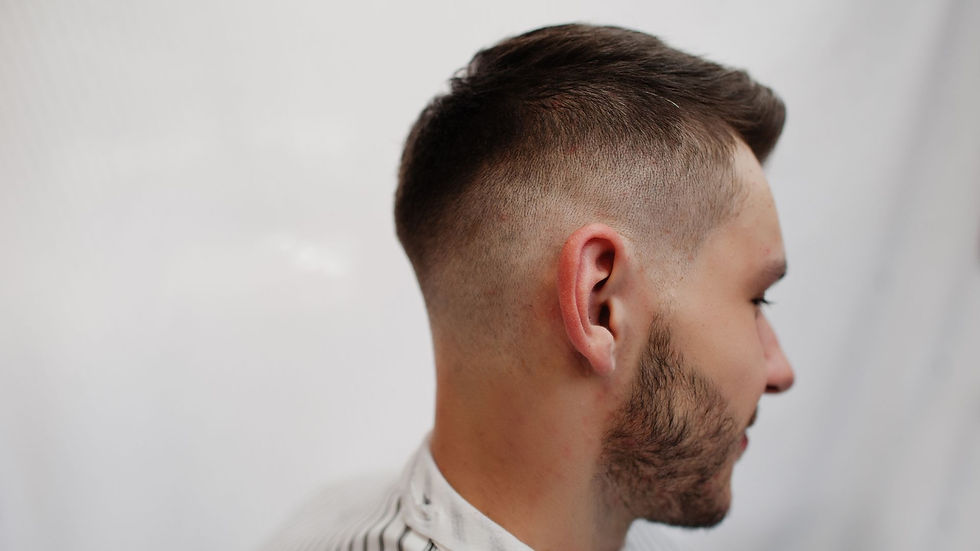
The high fade starts well above the temple, sometimes climbing close to the crown of the head. It's the most dramatic of the three, showing the most skin and creating the sharpest contrast between the tapered sides and whatever's happening on top.
Why Do High Fades Turn Heads?
Because there's nowhere to hide. A high fade puts your head shape, hairline, and barber's precision on full display. When it's done right, it looks incredibly sharp. When it's done wrong, every flaw shows. This is the fade that separates a good barber from a great one, because there's very little room for error in the blend.
Who Should Actually Get a High Fade?
Guys with thick, dense hair on top who want maximum contrast between the sides and the length up top
Men with strong, symmetrical head shapes since more skin is exposed
Anyone in a creative or casual work environment where bold style is welcomed rather than frowned upon
Guys who want their haircut to be a statement, not just background grooming
High Fade vs. Mid Fade: What's the Real Difference in Everyday Life?
Factor | Mid Fade | High Fade |
Visual boldness | Moderate | Maximum |
Regrowth visibility | Noticeable after 3 weeks | Noticeable after 2 weeks |
Skill required from barber | High | Very high |
Best hair density | Medium to thick | Thick, dense hair preferred |
Style pairings | Wide range | Best with structured top styles |
What Are the Drawbacks of a High Fade?
It's the highest-maintenance of the three by a wide margin. Because so much skin is exposed near the top of the head, regrowth becomes visible within two weeks in most cases. If you're not able to commit to regular visits, the sharp line will blur fast and start looking like an accident rather than a style choice.
High fades demand commitment, both from your wallet and your calendar. If you're the kind of guy who's already asking Google "barber near me" every other week anyway, this won't be a big adjustment. If you're not, think carefully before committing.
Low Fade vs. Mid Fade vs. High Fade: Head-to-Head Comparison
Let's put all three side by side so you can see exactly how they stack up.
Category | Low Fade | Mid Fade | High Fade |
Starting point | Above ear | Temple area | Above temple |
Boldness level | Subtle | Moderate | Maximum |
Maintenance frequency | 4-5 weeks | 3-4 weeks | 2-3 weeks |
Best for workplace | Very conservative | Most modern offices | Creative/casual environments |
Skill required | Moderate | High | Very high |
Skin exposure | Minimal | Moderate | Significant |
Cost over a year (avg.) | Lowest (fewer visits) | Moderate | Highest (frequent visits) |
Which Fade Actually Costs More Over a Year?
Since a high fade needs touch-ups roughly every two to three weeks compared to four to five weeks for a low fade, you're looking at nearly double the number of barbershop visits annually. At an average of $35 per haircut, according to pricing data compiled by Fash, that's a difference of $200 to $300 a year between the lowest and highest maintenance options. It's not a dealbreaker, but it's worth factoring into your decision if you're budgeting for grooming costs.
Numbers and starting points matter, but so does your face in the mirror. Let's talk about how face shape changes this whole equation.
Which Fade Suits Your Face Shape?
Your face shape has more influence over which fade looks best than any trend chart or magazine spread. I've had clients bring in photos of a haircut that looked incredible on someone else and looked completely wrong on them once we finished, simply because their face shape called for a different approach.
How Should Round Faces Approach Fade Height?
Round faces benefit from added height and angularity, since the goal is to create the illusion of length. A high fade paired with more volume on top elongates the face and breaks up the roundness. A low fade on a round face can sometimes emphasize width rather than reduce it.
What Works Best for Square Faces?
Square faces have strong jawlines and defined angles already, so a mid fade tends to soften things just enough without losing that structured look. High fades can work too, but they tend to emphasize the jaw even more, which some guys love and others find too intense.
How Should Oval Faces Choose a Fade?
Oval faces are the lucky ones here. Nearly every fade works because the proportions are already balanced. This is where personal style, hair texture, and lifestyle should be the deciding factors rather than face shape corrections.
What About Long or Rectangular Faces?
Guys with longer faces should lean toward low or mid fades with more width and volume left on top rather than height. A high fade paired with a tall top style can make a long face look even longer, which is rarely the goal.
Face Shape | Best Fade | Why It Works |
Round | High Fade | Adds height, breaks up roundness |
Square | Mid Fade | Softens angles without losing structure |
Oval | Any Fade | Balanced proportions suit all styles |
Long/Rectangular | Low or Mid Fade | Avoids adding unwanted height |
Diamond | Mid Fade | Balances narrow forehead and chin |
Face shape gets you most of the way there, but hair type is the other half of the equation, and it's just as important.
Which Fade Works Best With Your Hair Type and Texture?
Not every fade blends the same way across every hair type. Thick, coarse hair behaves completely differently under the clippers than fine, straight hair, and your barber needs to account for that before the first pass.
How Does Thick, Coarse Hair Respond to Fades?
Thick and coarse hair holds shape well, which makes it ideal for high fades since there's enough density on top to create real contrast against the shaved sides. The downside is that coarse hair also grows back more visibly, so high fades on thick hair need more frequent maintenance to stay crisp.
What About Fine or Thin Hair?
Fine hair tends to lie flatter and shows scalp more easily, even on top. A low or mid fade usually looks more polished on fine hair because there's less contrast to maintain, and the overall look stays fuller rather than emphasizing thinness.
How Should Curly or Coily Hair Approach Fades?
Curly and coily hair adds natural volume, which pairs beautifully with mid and high fades. The tighter the curl pattern, the more the top hair "pops" against the tapered sides. This is part of why mid and high fades became such a defining look in Black barbershop culture, where textured hair and sharp fades have always gone hand in hand.
Straight Hair and Fades: What Should You Know?
Straight hair shows the fade line very clearly since there's no natural texture to soften the transition. This means your barber needs to be extra precise with straight hair, especially on high fades, since any unevenness in the blend will be obvious.
Hair Type | Recommended Fade | Reasoning |
Thick/Coarse | High or Mid | Holds shape, creates strong contrast |
Fine/Thin | Low or Mid | Avoids overemphasizing thinness |
Curly/Coily | Mid or High | Natural volume pairs well with contrast |
Straight | Low or Mid | Easier to blend seamlessly |
Hair type and face shape are half the battle. The other half is how your fade fits into your actual daily life, which brings us to lifestyle and career.
How Does Your Lifestyle and Profession Affect Your Fade Choice?
I've had clients walk in wanting a high fade after seeing it on an athlete or actor, then walk back out with a low fade once we talked through their nine-to-five in a conservative office. Your haircut has to work for your life, not just your Pinterest board.

What Fade Works Best in Corporate Environments?
Low fades remain the safest choice for corporate settings, law firms, banking, and other traditional industries where conservative grooming is still the unwritten rule. It's sharp enough to look intentional without drawing the kind of attention that might get you a comment from HR.
Are Mid Fades Acceptable in Most Modern Offices?
Generally, yes. Most tech companies, marketing agencies, and modern workplaces have relaxed significantly on personal style, and a well-blended mid fade reads as put-together rather than rebellious. When in doubt, ask around your office or look at how your manager and senior staff wear their hair.
When Does a High Fade Make Sense Professionally?
Creative industries, entertainment, personal training, barbering itself, and customer-facing roles in fashion or hospitality tend to embrace bold grooming choices. If your work rewards personality and individuality, a high fade can actually work in your favor rather than against you.
Does Your Fade Choice Matter for Job Interviews?
It's worth playing it safer for interviews regardless of the industry. A low or mid fade signals put-together without risking an unconscious bias from an interviewer who might associate a high fade with rebelliousness, fair or not. You can always go bolder once you've got the job secured.
Lifestyle affects the decision, but so does something more practical: how much upkeep you're actually willing to commit to.
How Much Maintenance Does Each Fade Require?
This is the section clients underestimate the most. Everyone wants the sharp look in the chair, but not everyone wants to be back in that chair every two weeks to maintain it.
How Often Should You Get a Low Fade Touched Up?
Every four to five weeks is standard. Because the starting point sits close to the hairline, regrowth blends naturally into the existing taper rather than creating a hard, visible line.
How Often Should You Get a Mid Fade Touched Up?
Every three to four weeks. This is the middle ground in every sense, including how often you'll need to show up for a cleanup.
How Often Should You Get a High Fade Touched Up?
Every two to three weeks. Once regrowth starts filling in near the temple, the sharp contrast that makes a high fade look so good starts to disappear fast.
Can You Maintain a Fade at Home Between Visits?
Some guys use trimmers at home to clean up the neckline or sideburns between barbershop visits, but I'd caution against trying to maintain the actual fade blend yourself unless you've had real practice. A rushed at-home touch-up is the number one reason clients come in asking for a fix appointment.
Fade Type | Recommended Touch-Up Schedule |
Low Fade | Every 4-5 weeks |
Mid Fade | Every 3-4 weeks |
High Fade | Every 2-3 weeks |
Maintenance schedules lead directly into the next practical concern most guys have: what this is all going to cost.
How Much Should You Expect to Pay for Each Fade?
Fade pricing typically doesn't change based on which type you choose since it's the same amount of clipper work either way. What changes is how often you're paying for it.
Is a High Fade More Expensive Than a Low Fade?
Not per visit, but over the course of a year, yes, significantly. Since high fades need touch-ups nearly twice as often as low fades, you're paying for roughly double the number of visits annually.
What's a Reasonable Price Range for a Fade Haircut?
Prices vary widely by region and shop tier, generally ranging from $25 at value barbershops to $75 or more at premium grooming studios in major cities, according to industry pricing benchmarks reported by Booksy in 2023.
Should You Tip Differently Based on Fade Complexity?
High fades require more time and precision, so a slightly higher tip, in the range of 20 to 25 percent instead of the standard 15 to 20 percent, is a fair way to acknowledge the extra skill and time involved.
Fade Type | Avg. Cost Per Visit | Visits Per Year | Estimated Annual Cost |
Low Fade | $35 | 10-13 | 350-455 |
Mid Fade | $35 | 13-17 | 455-595 |
High Fade | $35 | 17-26 | 595-910 |
Money and maintenance matter, but none of it counts for much if you can't communicate what you actually want. Let's fix that.
What Should You Say to Your Barber to Get the Right Fade?
Half the fades that go wrong in a shop aren't the barber's fault. They're a communication breakdown. Clear language at the start of the appointment saves everyone a headache.

What's the Best Way to Describe Fade Height?
Instead of just saying "low," "mid," or "high," point to the exact spot on your head where you want the fade to start. Every barber's mental map of "mid" can differ slightly, so a physical reference point removes the guesswork.
Should You Bring Reference Photos?
Absolutely, and it's one of the smartest things you can do. A photo shows your barber the exact contrast, blend style, and top length you're picturing, which eliminates a lot of back-and-forth guessing.
What Questions Should You Ask Before the Clippers Start?
"Based on my hair type, would you recommend adjusting this fade at all?"
"How often will I need to come back to maintain this look?"
"Does this fade work well with my face shape, or would you suggest something different?"
Is It Okay to Ask for Adjustments Mid-Haircut?
Yes, and any good barber would rather you speak up early than stay quiet and leave unhappy. Small adjustments to fade height or blend intensity are much easier to make halfway through than after the cut is finished.
Communication solves most fade problems before they start. But let's talk about the mistakes I see most often, because avoiding them will save you a bad haircut and an awkward few weeks.
Common Mistakes Men Make When Choosing a Fade
After two decades of fades, certain mistakes show up again and again, regardless of age or background.
Mistake One: Choosing a Fade Based on a Celebrity Photo Alone
Face shape, hair density, and head shape all differ from person to person. What looks incredible on a magazine cover might not translate directly to your features.
Mistake Two: Underestimating Maintenance Commitment
Guys fall in love with a high fade in the chair, then show up six weeks later wondering why it looks nothing like it did on day one. Be honest with yourself about how often you'll actually book appointments.
Mistake Three: Ignoring Hair Texture When Requesting a Style
A mid fade that photographed beautifully on straight hair won't translate the same way onto thick, curly hair without adjustments. Trust your barber's input on texture-specific tweaks.
Mistake Four: Going Too Bold for a Conservative Workplace
A high fade might look sharp to you, but if it raises eyebrows at the office, that's a real cost worth considering before you commit.
Mistake Five: Skipping the Consultation Conversation
Sitting down, pointing at a photo, and saying nothing else skips the most valuable five minutes of the appointment. Talk through your goals, your face shape, and your lifestyle before the clippers touch your head.
Avoiding these mistakes gets you 90 percent of the way to a great fade. For the final piece, let's zoom out and look at how fades became such a massive part of grooming culture in the first place.
A Brief History of the Fade Haircut
Understanding where the fade came from adds a little weight to the decision you're making today, because you're stepping into a tradition that's been refined for generations.
How Did the Fade Originate?
The fade traces back to military haircuts in the early-to-mid 20th century, where short, tapered sides were practical for hygiene and uniformity. From there, Black barbershops in the United States took the technique and elevated it into an art form throughout the 1960s through 1980s, developing the tight, precise blends that define modern fades today.
How Did Pop Culture Push the Fade Into the Mainstream?
Hip-hop culture in the late 1980s and 1990s put fades on a global stage. Artists, athletes, and actors wore high and mid fades as a signature look, and barbershops across the country saw demand skyrocket. By the 2010s, fades had become the standard request across nearly every demographic, not just within the communities that originated the style.
Why Does the Fade Remain So Popular Today?
Versatility. A fade can be dressed up for a wedding or dressed down for a weekend, paired with curly hair or straight, short top or long. Few haircuts in men's grooming history have proven this adaptable across so many different looks and lifestyles.
History gives context, but let's get practical again and talk about specific situations, starting with big life events.
Fades for Special Occasions: Weddings, Interviews, and Big Events
Some appointments carry more weight than a routine monthly cleanup, and it's worth thinking through your fade choice a little differently when there's a big event on the calendar.
What Fade Should You Get for a Wedding?
Low or mid fades photograph beautifully and age gracefully across the multi-hour timeline of a wedding day. A fresh high fade can look incredible for the first few hours but may show regrowth by the time evening photos roll around if it's not timed perfectly.
How Far in Advance Should You Get a Fade Before a Big Event?
Book your appointment two to three days before the event, not the morning of. This gives the fade line time to settle slightly and avoids that just-left-the-shop look in every photo.
What Fade Is Safest for a Job Interview?
Stick with low or mid. It's the safest bet across nearly every industry, and it signals preparedness without risking any unconscious bias tied to bolder grooming choices.
Big events call for a little extra planning. The same goes for one specific group of clients I get asked about constantly: parents booking for their sons.
Fades for Kids and Teens: What Parents Should Know
A good chunk of my chair time over the years has been dads bringing in their sons for their first real haircut experience, and fades come up constantly in these conversations.
What Fade Is Best for Younger Kids?
Low fades are usually the smartest starting point for younger boys. They're forgiving, low-maintenance, and easy to grow out between school photo days and family events.
Are High Fades Appropriate for Teenagers?
Absolutely, and many teens gravitate toward bold high fades to express individual style, especially once they're old enough to manage their own appointment scheduling and understand the maintenance commitment involved.
How Should Parents Handle School Dress Code Concerns?
Some schools have grooming policies that restrict extreme designs or shaved patterns, so it's worth checking your school's handbook before committing to anything beyond a standard fade.
What Should Parents Communicate to the Barber for a Child's First Fade?
Mention your child's comfort level with clippers, whether it's their first time getting a fade specifically, and any school-related restrictions upfront. A little context goes a long way in making sure the appointment goes smoothly for everyone.
We've covered face shape, hair type, lifestyle, cost, history, and special occasions. Now let's bring it all together with a final, straightforward verdict.
Frequently Asked Questions
What is the most popular fade haircut right now?
The mid fade remains the most requested style across most barbershops, largely because it balances boldness with everyday versatility. It works with a wide range of face shapes, hair types, and workplace environments, which makes it the default recommendation for clients who aren't sure which direction to go.
Can I switch between low, mid, and high fade at each appointment?
Yes, though it's worth mentioning to your barber ahead of time since transitioning between fade heights sometimes requires extra blending work to avoid a choppy transition, especially if you're moving from a high fade down to a low fade in one sitting.
Does a fade work with long hair on top?
Absolutely. Fades pair with virtually any length on top, from buzzed short to several inches of length for styles like a textured quiff or slicked-back pompadour. The fade simply refers to what's happening on the sides and back.
Will a fade make my hair grow back thicker?
No. This is a common myth. Cutting hair, including with clippers used in fading, does not change hair thickness or growth rate. It may appear thicker temporarily because blunt-cut ends can feel coarser than naturally tapered tips.
How do I know if my barber did a good fade?
Run your hand along the sides and check in the mirror from multiple angles. A well-done fade should have no visible lines or steps in the transition, just a smooth gradient from skin to hair. If you can spot a hard line anywhere, the blend needs more work.
Is a fade appropriate for thinning hair or early balding?
Yes, and it's often recommended. Low and mid fades in particular can help minimize the visual contrast between thinning areas and fuller sections, creating a cleaner, more intentional look rather than drawing attention to hair loss.
How long does it take to get a fade haircut?
Most fade haircuts take between 20 and 45 minutes depending on complexity, hair length, and whether additional detailing like a beard trim or hot towel treatment is included in the service.
Can I get a fade if I have a cowlick or unusual hair growth pattern?
Yes, a skilled barber can typically work around cowlicks and unusual growth patterns, though it's worth mentioning them during your consultation so adjustments can be made to the cutting angle and direction.
Should I wash my hair before a fade appointment?
Most barbershops prefer clean, dry hair for the most accurate cut, since product buildup and moisture can affect how clippers glide and how accurately length is judged. If your shop doesn't include a wash, arrive with freshly washed hair from the day before rather than same-day wet hair.
Conclusion
If you want the safest, most versatile option that works in nearly any professional setting, get a low fade. If you want something that balances boldness with everyday practicality and works with almost any face shape or hair type, the mid fade remains the smartest all-around choice, which is exactly why it stays the most requested cut in barbershops nationwide. If you've got the hair density, the confidence, and the willingness to show up every two to three weeks for maintenance, a high fade delivers a look nothing else can match.
There's no universally "correct" answer here. There's only the right answer for your face, your hair, your job, and your patience for upkeep. Talk it through with your barber, be honest about your lifestyle, and don't be afraid to adjust the plan halfway through the cut if something doesn't feel right. That conversation, more than any photo you bring in, is what separates a fade you tolerate from a fade you actually love wearing every single day.